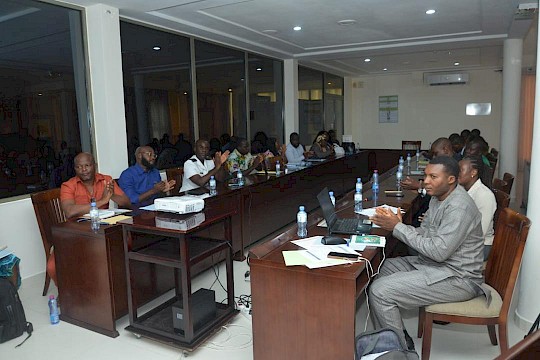
The occasion enabled the NTF to plan the implementation of activities under the project towards reducing and preventing marine plastic litter from sea-based sources.
Representatives across the ministries of Maritime Economy, Maritime, Agriculture and Fisheries, Environment and Defense were in attendance alongside representatives of NGOs and universities.
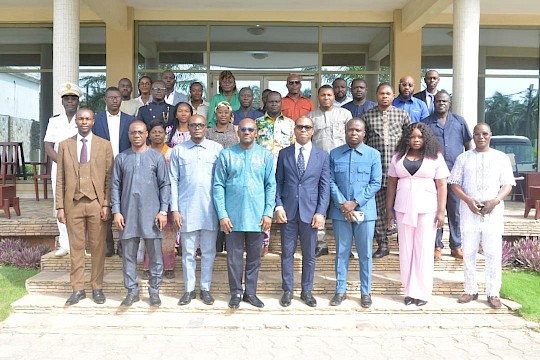
Members of the OceanLitter Programme Coordination Unit gave online presentations on the OceanLitter Programme, including sharing the Guidance Document on the Country Status Assessment (CSA) on Sea-Based Marine Plastic Litter, and the Guidance Document on Development of National Action Plan (NAP) on Sea-based Marine Plastic Litter.
Developing the CSA and NAP are the first steps to be undertaken by Togo to prioritize national actions and effectively implement activities aiming at the prevention and the reduction of marine plastic litter from the maritime and fisheries sectors.
The NTF meeting also provided an opportunity for participants to exchange views and gain knowledge on the issue of marine pollution in general with a particular emphasis on marine plastic litter. It was agreed that legal and policy reforms as well as capacity building on port waste management and port state control are priority actions to be implemented going forward.
This milestone signals that Togo is committed to establish partnership on the national level among different institutions under the NTF umbrella and jointly plan and undertake activities at the national level, including legal and policy reforms, public awareness campaigns, and other relevant activities.
GloLitter was the first global project supporting developing countries in identifying opportunities for the prevention and reduction of marine plastic litter bringing different stakeholders together for joint action. It is also the first project under the umbrella of the OceanLitter Programme. The project is supported by Norway.