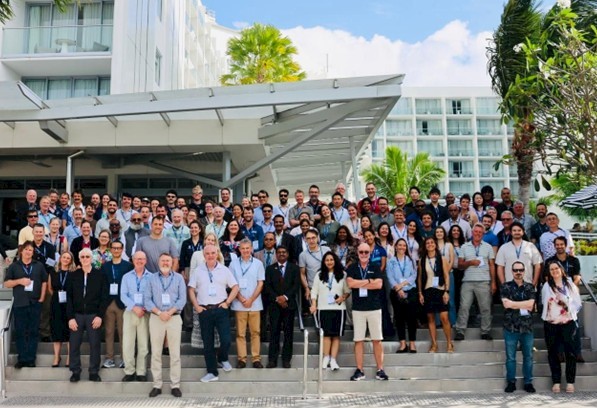
The WGFTFB 2026 annual meeting and FAO-ICES Symposium was held in Cairns, Australia, from 11 to 15 May 2026, with participation from 115 fishing gear experts from 36 countries.
FAO’s participation in the International Council for the Exploration of the Sea (ICES) - FAO - Working Group on Fishing Technology and Fish Behaviour (WGFTFB) directly supports a variety of initiatives and activities under the OceanLitter Programme:
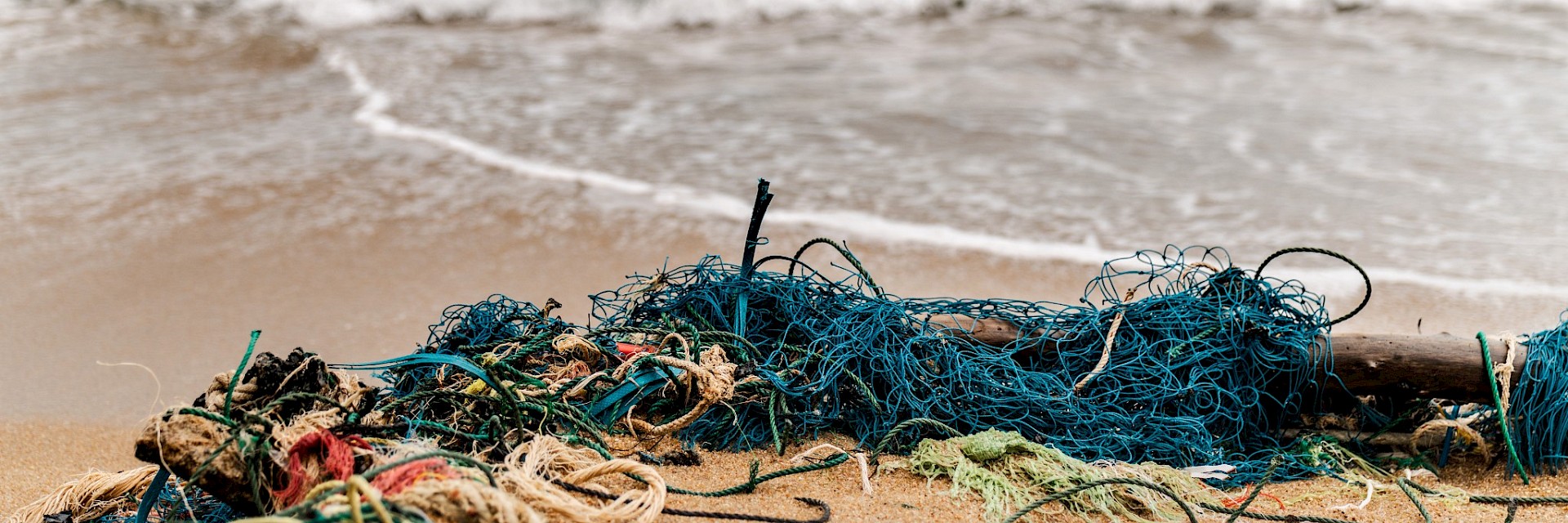
- Supporting implementation of the GloLitter Partnerships project on the establishment of synergetic knowledge partnerships with ongoing global efforts aimed at addressing ALDFG.
- Supporting the RegLitter project on the development of ALDFG indicators to inform fisheries management policies.
- Information gathered from the dedicated topic group on fishing gear marking will further inform and support actions related to fishing gear marking and ALDFG reporting under the IMO Action Plan to Address Marine Plastic Litter from Ships.
The ICES/FAO Working Group on Fishing Technology and Fish Behaviour (WGFTFB) studies measurements and observations relating to scientific and commercial fishing gears, design and statistical methods and operations, and fish behaviour in relation to fishing. The annual meeting provides a platform to deliberate, discuss and synthesize recent innovative research on topics related to fishing technology and fish behaviour.
FAO’s collaboration with the ICES/FAO WGFTFB enhances global collaboration and shares successful practices in alignment with the FAO Blue Transformation Roadmap through open sessions and focused multi-year topic groups. Current Terms of Reference for the group include research on: i) gears used in abundance estimation; ii) reduction of bycatch and discards; iii) environmentally friendly gears and innovations to mitigate ALDFG; iv) improving fuel efficiency and emissions; v) fish behaviour in relation to gear; vi) summaries of relevant national research activities; and, vii) innovative technologies improving the safety of fishing operations.
Every third year, as part of the annual WGFTFB meeting, FAO develops and leads a symposium of relevant topics in collaboration with the Working Group chairs. This year the FAO-ICES Symposium included a multi-day symposium for delegates to participate in global collaboration and to share good practices and case studies in support of the Blue Transformation Roadmap. This year’s FAO-ICES Symposium theme was Future Proofing Fisheries: Progress, Challenges and Needs. Researchers, fishers, and other stakeholders attended and shared presentations for the following eight symposium themes, with a focus on the Asia-Pacific region: 1) Bycatch reduction in mobile gears, 2) Technological advances in fisheries, 3) Bycatch reduction in static gears, 4) Onboard safety, 5) Alternative energy sources and fuel efficiency, 6) Fish Aggregating Devices (FADs), 7) Marine plastic pollution from fisheries, and 8) Future-proofing commercial fisheries.
During this year’s meeting and symposium, 55 plenary presentations and 22 posters provided details on recent research activities covering the eight symposium themes.
Two focus sessions provided opportunities for discussions on lessons learned from research failures and results with no effects, as well as innovative codend designs to improve fish welfare, discard survival, product quality, and selectivity.
In addition to plenary presentations, four Topic Groups engaged in break-out sessions with detailed discussions on:
1. Means and methods for the implementation of FAO Voluntary Guidelines on the Marking of Fishing Gear (TG Marking)
2. Vessel and gear characterization: towards a Global framework for Impact estimation and perFormance for Trawl fisheries (TG GIFT)
3. Building resilience and future-proofing commercial fisheries (TG Resilience)
4. Operational and technical constraints of fishing gears to support coexistence with offshore wind and open-ocean aquaculture (TG Multi-use)